
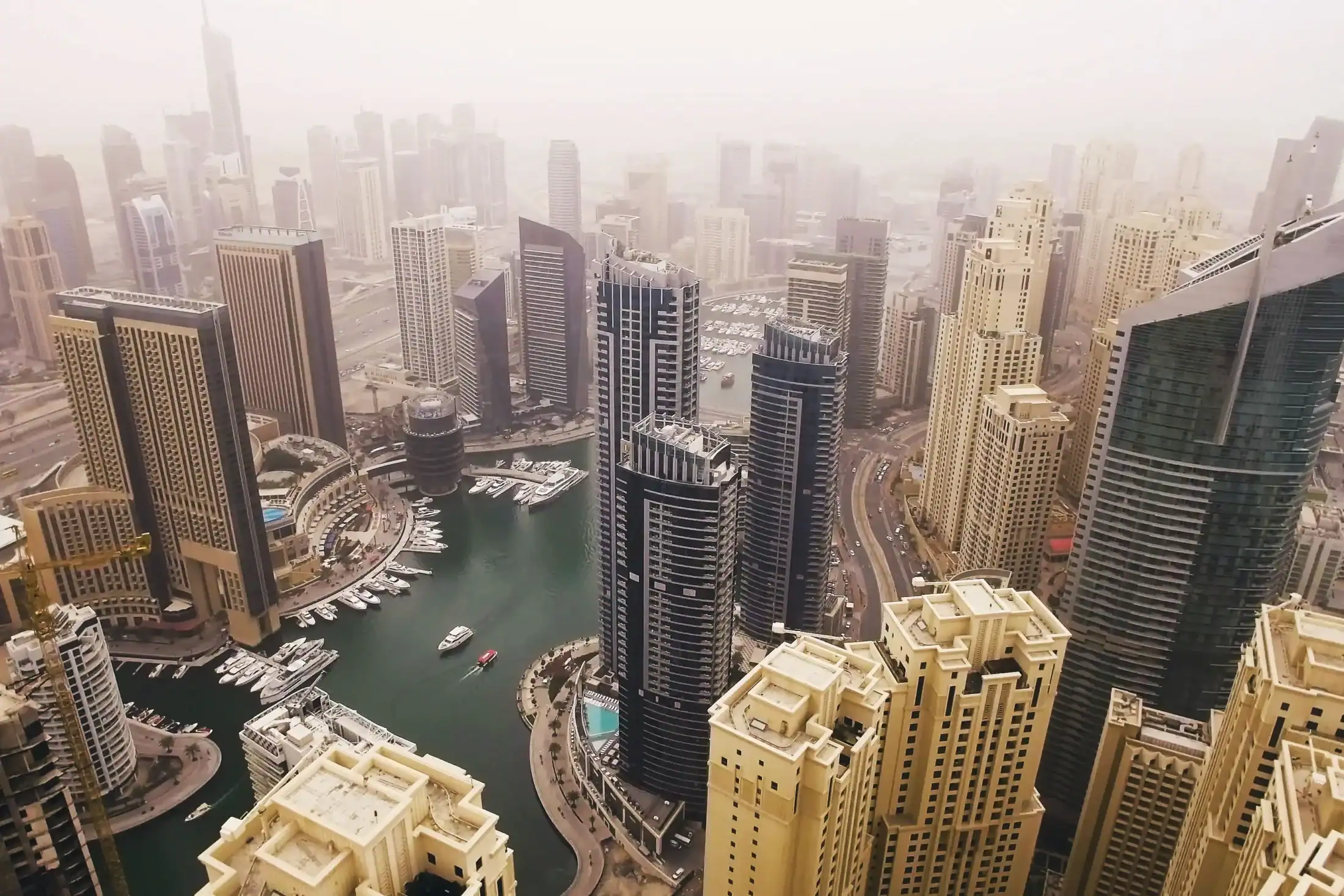
The UAE real estate market reached a clear inflection point in Q2 2026, absorbing the shock of extended regional conflict with sharply divergent outcomes across emirates. Where Dubai recorded falling volumes, values and rents in tandem, Abu Dhabi delivered only a mild quarterly moderation set against half-year growth of more than 100%, and Sharjah normalised from an exceptional first quarter while remaining far ahead of its 2025 run rate. Commercial and industrial markets told a different story again, with office rents holding firm or advancing even as residential rents softened, and industrial rents continuing to grow across every tracked location.
Dubai Corrects
Residential transactions fell approximately 19% quarter-on-quarter to 35,884, apartment values eased 4.0% to AED 1,960 per sq ft, and rental rates declined 8–10% across major communities. Like-for-like analysis points to underlying price adjustments of 5–7%, and up to 10% in selected locations – materially steeper than headline averages suggest. Supply has become the dominant variable: published estimates of Q2 handovers span 9,200 to 27,300 units, against only 5,335 units launched, marking an inversion from a launch-led to a delivery-led market.
Abu Dhabi Decouples
Transactions eased 9% quarter-on-quarter to 7,129, yet half-year volumes were up 108% year-on-year, with residential prices climbing approximately 21.6% annually – signalling a moderation in pace rather than a shift in direction. Office space remained the tightest in the emirate, with Grade A rents on Al Maryah Island reaching AED 6,000 per sq m and occupancy near 96%. Industrial investment hit a record AED 48.5 billion in commitments during the quarter, and the new ADREC rent freeze – capping renewal increases at 0% – marks a key regulatory shift for landlords and investors.
Sharjah and the Northern Emirates
Sharjah remained the largest of the Northern Emirates by volume, with H1 2026 residential transactions more than doubling year-on-year (+113%) to 13,081. Ras Al Khaimah commanded the highest rents in the Northern Emirates and the strongest rental growth (+11.9% y-o-y), driven by tourism-linked and branded waterfront product, while Ajman, Umm Al Quwain and Fujairah each showed distinct dynamics – from a single transformative masterplan on Siniya Island to the opening of the first Abu Dhabi–Fujairah passenger rail link.
Commercial & Industrial Lead Growth
Dubai office leasing rose 4% quarter-on-quarter with rents holding at AED 238 per sq ft, while occupancy stood at approximately 94% in Dubai and 96% in Abu Dhabi. Industrial rents advanced across every tracked location in both emirates, making industrial the most uniformly positive segment in the report, supported by record foreign direct investment and national industrial strategy.
A New Regulatory Shift
The ADREC rent freeze, capping renewal increases at 0%, marks a key change for Abu Dhabi landlords and investors to factor into income-based valuations going forward. In Dubai, refinancing rose to approximately 70% of valuation instructions by quarter-end, with owners showing little appetite to sell – evidence of deferred decisions rather than distress.
Get the full breakdown of residential, commercial, and industrial performance across Abu Dhabi, Dubai and the Northern Emirates, market sentiment data, and SKH’s outlook for the second half of 2026.