
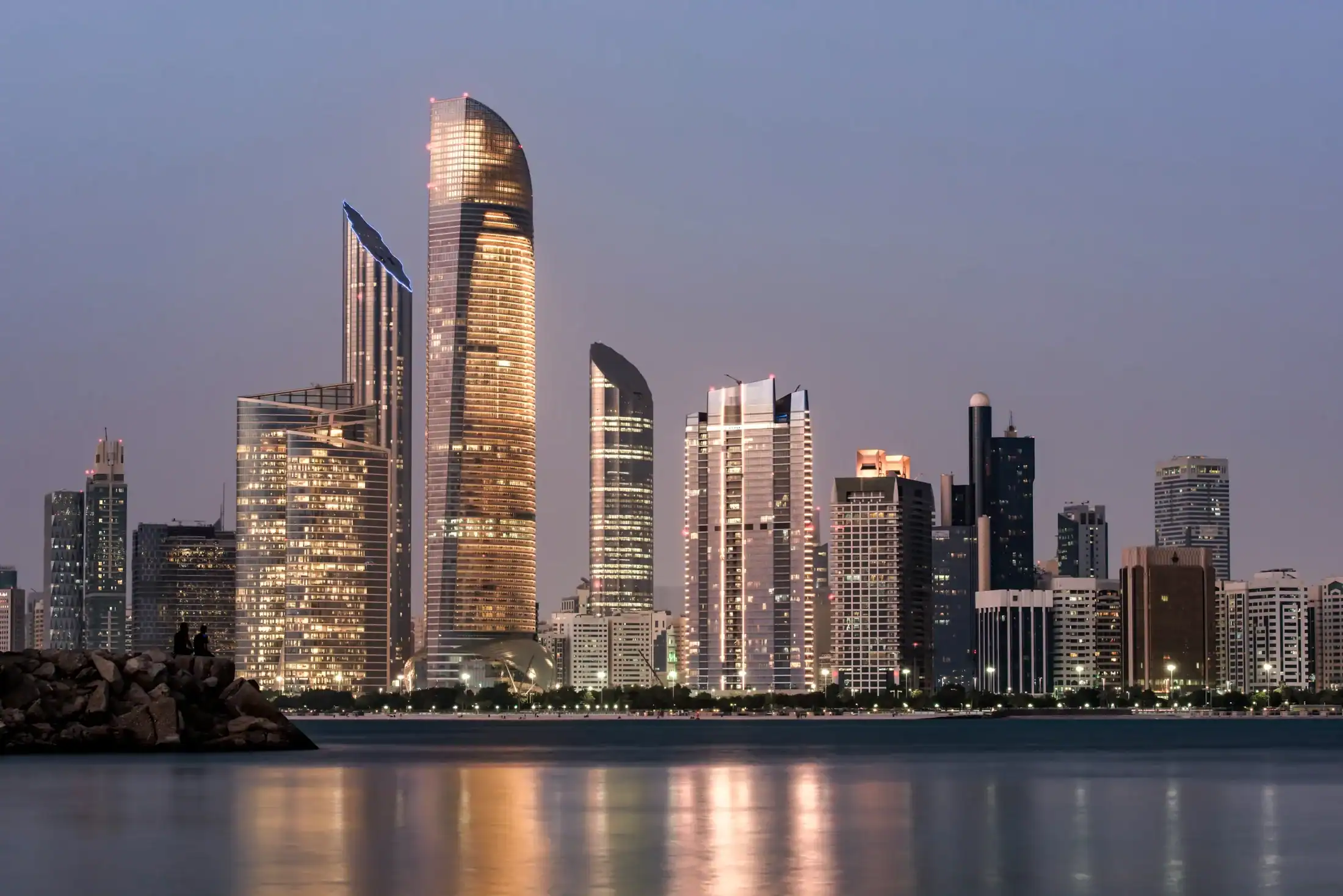
The five Northern Emirates – Sharjah, Ajman, Umm Al Quwain, Ras Al Khaimah and Fujairah – recorded a first half of 2026 that ran counter to the wider UAE picture. Four of the five posted rental growth over the period while Dubai residential rents declined, and the affordability gap that drives demand across all five widened rather than narrowed. Sharjah remains the largest of the group by transaction volume and delivered the strongest half-year growth of any market covered by SKH this period.
Sharjah Converts Affordability into Growth
Registered transactions reached 59,460 with an aggregate value of AED 29.5 billion, up 23.7% in volume and 9.3% in value year-on-year. Residential sales more than doubled year-on-year (+113.0%), and buyers were drawn from 121 nationalities following freehold reform. Apartment prices eased 2.9% quarter-on-quarter to approximately AED 1,010 per sq ft, while villa pricing held firmer at approximately AED 970 per sq ft, supported by established master-planned communities such as Masaar, Al Zahia and Hayyan. Leading master plans now price at roughly double established ready stock.
Ras Al Khaimah Separates on Price and Yield
Ras Al Khaimah commands the highest rents in the region at approximately AED 67 per sq ft and recorded the strongest rental growth of the five markets at +11.9% year-on-year. Prime branded waterfront product on Al Marjan Island has exceeded AED 2,400 per sq ft – the highest residential pricing anywhere in the Northern Emirates – while mainland RAK City remains available from AED 350 per sq ft. The market is now distinctly two-tiered: coastal and branded stock is priced for capital appreciation at gross yields of 5.5–6.5%, while mainland apartments deliver income yields of 8–10%+. Pricing is closely tied to the phased opening of the USD 5.1 billion Wynn Al Marjan resort, expected in spring 2027.
Ajman, Umm Al Quwain and Fujairah – Divergent Drivers
Ajman recorded 6,815 transactions worth AED 10.8 billion, with demand led by first-time buyers and residency-threshold investors, and a clear premium sustained at Al Zorah – the emirate now sits roughly one price tier below Sharjah. Umm Al Quwain and Fujairah are each being reshaped by a single structural variable rather than by market cycle: a 23 million sq ft masterplan on Siniya Island in Umm Al Quwain, and the arrival of passenger rail in Fujairah, where the Abu Dhabi connection launched 30 June 2026 and the Dubai link follows on 30 September 2026. Fujairah was the only market in the group to record a rental decline (−4.0% year-on-year), as the connectivity story has not yet fed through to pricing evidence.
No Distress, Deferred Demand
Regional and geopolitical uncertainty – not fundamentals – was cited by 67% of surveyed market participants as the single largest barrier to entry, well ahead of high property prices (18.2%) or financing costs. Over 60% of existing owners indicated they would hold or buy more property within six months, with only around 4% intending to sell, pointing to deferred decisions rather than financial distress. These remain shallow markets: interquartile asking ranges carry materially wider error bands than the equivalent Dubai or Abu Dhabi evidence, and no commercial or industrial data was available for any of the five emirates.
Get the full breakdown of each emirate’s residential performance, apartment rental bands, sales-by-location data, investor sentiment findings, and SKH’s outlook for the second half of 2026.